
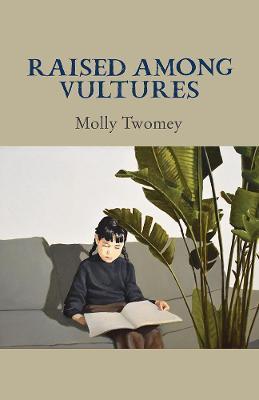
Description
Raised Among Vultures is Molly Twomey’s debut poetry collection.
Look, if we are going to do this,
know that I was raised among vultures.
— ‘Don’t pick me tulips’
Such bold injunctions announce a formidable new talent. In Raised Among Vultures, Molly Twomey’s spectacular, and frequently disturbing, debut seemingly nonchalant expressions of hard experience (‘Over coffee I tell you I slept with some guy’) meld with vivid imaginings. Excited hearts are ‘bumper cars’, a Coke is ‘a huge cup of starless sky’ and a radish is ‘a red grenade’. In this world of Tumblr, online group therapy, NA and Touch ID, Molly Twomey’s unflinching art chronicles a history of eating disorders and inner conflicts. These are frontline reports from the outposts of youth, ‘nights / spent drunk with boys we could barely remember, / would never forget.’
But Raised Among Vultures, while venturing that ‘It’s impossible to live without breaking someone’, is also a book about longing and lessons — ‘It took so long to learn that I won’t die / if I sleep in.’ In her first collection Molly Twomey breathes new life into Irish poetry.
‘Twomey’s high-wire couplet and triplet stanzas are pared down to the essentials, heirlooms beginning like an Emily Dickinson echo, ‘My dietician says if I don’t eat / my oestrogen won’t restore. / My body will always be a door // lock on its hinges, / safe-guarding its room / of dust and secrets.’ // but the wick twist is Twomey’s own, as she wonders if the dietician’s child is ‘heavy enough that she could use him / as a kettlebell for Russian twists?’ Like Hodgson, Twomey has a strong sense of two selves — ‘but isn’t starving yourself / the most brutal thing? The slow collapse / of bones, sprained ankles to sunken cheeks, / the last segment of voice / burrowing into muffled quiet.’ (The Most Brutal Thing).
This sense of two selves is mirrored in relationships and Twomey’s frequent use of the second person point of view. Twomey is a gifted storyteller, her recovery narrative spiked with keen insight and dark humour as she cautiously observes her ambushing self’ — Martina Evans, The Irish Times
‘. . . a poet for a new Ireland, for a new post-Covid world’ — Thomas McCarthy